• Home
  • Travel
  • Life Style
    • Category
    • Category
    • Category
  • About
  • Contact
  • Download

Korean World

Show you all about South Korean by my point of view

facebook google twitter tumblr instagram linkedin
Terkadang kita pasti kesulitan dalam membuat poster apalagi jika kita hanya memiliki imajinasi yang bisa dibilang tidak terlalu banyak. Kali ini, saya akan memberitahu cara mudah dalam membuat poster dengan menggunakan CorelDraw X6 yang pasti dimiliki banyak orang. Hanya saja, biasanya masih ada yang bingung tentang bagaimana cara penggunaan CorelDraw X6 apalagi untuk orang awam seperti kita.
Sekarang saya akan memberitahu cara membuat poster sederhana yang sangat mudah. Berikut beberapa langkahnya. Pastikan sudah membuka aplikasi CorelDraw X6 ya~


  1. Pertama-tama, kita buat kotak dengan rectangle tool
  2. Buat lengkungan untuk background menggunakan bezier tool. Lengkungan bebas
  3. Klik bangun dari bezier tadi dengan kotak yang sudah dibuat. Lalu pilih interselect.
  4. Setelah itu hapus bangun yang sudah di interselect.
  5. Buat hingga memenuhi kotak agar dapat dijadikan background.
  6. Beri warna pada salah satu curve. Jika kesulitan menekan curve yang sudah dibuat, bisa menggunakan object manager yang ada di samping ( bisa dimunculkan melalui windows )
  7. Lalu pilih transparency, kemudian sesuaikan kotak bagian atas seperti pada gambar. Gunakan starting transparency 90.  Akan jadi seperti ini nantinya.
  8. Lakukan langkah yang sama seperti tadi. Tetapi pada bagian transparency type dipilih substract. Jadinya akan seperti gambar dibawah ini.

  9. Lakukan hingga curve terakhir. Dan jadilah seperti ini. ( warna bebas sesuai keinginan ).
  10. Siapkan gambar dengan format .png dan masukan ke corel melalui file-open. Posisikan seperti gambar diatas.
  11. Gambar tadi kemudian dilakukan transparency. Sesuai dengan gambar diatas. Berikut lampiran untuk gambar kota warna-warninya ( https://drive.google.com/file/d/1eBQ2KJk_v81JYkr3KSwjV15Y2-e4JGwD/view?usp=drivesdk ) 

  12. Buat lagi kotak seperti pada gambar diatas dengan rectangle tool.
  13. Rotasikan seperti gambar dibawah.
  14. Dengan menggunakan outline pen, pilih style garis putus-putus seperti di gambar.

  15. Dengan outline pen lagi, pilih ketebalan garis 0,25 cm. Lalu beri warna sesuai keinginan.
  16. Dengan text tool box, buat tulisan sesuai dengan keinginan.
  17. Posisikan tulisan ke dalam poster. Beri warna sesuai dengan keinginan.
  18. Setelah itu, pada keyboard klik ctrl+A, lalu klik ctrl+C
  19. Buat page kedua pada corel.
  20. Lalu pilih artistic media sesuai dengan kursor digambar, lalu buatlah splatter atau efek splash sesuai dengan selera.
  21. Hasil splatter akan seperti gambar dibawah dan tinggal diberi warna
  22. Setelah itu, pada page 2, klik ctrl+V pada keyboard. Poster awal tadi akan muncul lagi dan kita tinggal merapikan splatter yang sudah dibuat tadi seperti gambar diatas.
  23. Setelah selesai, klik pada keyboard Ctrl+E, kemudian export file menjadi file JPEG.
  24. Setelah di export, pilih menu file-save as
  25. Lalu save project dengan format CDR.
Berikut adalah contoh poster yang sudah jadi.
( https://drive.google.com/file/d/1NHKVVLNI6NhoFVkRpqtr_pGWlUaXbnqt/view?usp=drivesdk )


Semoga tutorial ini berguna. Selamat mencoba!!!
Share
Tweet
Pin
Share
No comments


Sebagai negara dengan 4 musim, Korea Selatan memiliki berbagai hal unik disetiap musimnya. Pada kali ini, kita akan membahas musim dingin di Korea Selatan. Salah satu hal uniknya adalah makanan atau jajanan pinggir jalan yang semakin populer dikalangan turis-turis mancanegara. Dalam video yang diunggah akun Feed The Cory dalam youtube, akan membahas mengenai Korean Street Foods di kawasan Myeongdong pada musim dingin.

Kawasan Myeongdong sangat populer dengan pusat perbelanjaan, restoran, dan street foods. Setiap berganti musim, menu yang ditawarkan untuk jajanan pinggir jalan ini juga berubah mengikuti musim yang sedang berlangsung. Karena kali ini adalah musim dingin, Feed The Cory membagikan perjalanan yang menampilkan menu-menu jajanan pinggir jalan ketika musim dingin. Karena cuaca yang dingin, kebanyakan menu yang diperlihatkan adalah menu-menu yang cocok untuk musim dingin dan bersifat menghangatkan tubuh. Kita bisa melihat Fried Dumpling¸Octopus Leg Satay, Fried Crab, Yaki Noodles, Bulgogi, dan berbagai jus buah yang langsung dibuat ditempat tersebut dengan buah yang masih segar.

Selama perjalanannya, kita bisa melihat ada banyak sekali pusat perbelanjaan maupun kios-kios kecil yang menjual semacam souvenir yang lucu-lucu.

Yang harus diperhatikan ketika mengunjungi Street Foods adalah jenis makanannya. Untuk wisatawan muslim, harus selalu mengecek apakah daging yang digunakan adalah daging sapi atau daging babi, dikarena kedua daging tersebut wajar dikonsumsi di Korea. Jika menemukan makanan dengan kata-kata samgyupsal, pork belly, atau hal-hal lain berbau daging babi, lebih baik untuk tidak membelinya.
Dikarenakan kawasan Myeondong terbilang cukup ramai, jika kita membawa anak kecil, kita harus selalu waspada agar tidak terlepas dari pandangan kita dan tersesat.

Itu adalah sedikit review dari video Feed The Cory mengenai Streets Food Myeondong. Semoga kalian menikmatinya!


Sumber : https://youtu.be/QUpJpiuN9Zg

Share
Tweet
Pin
Share
No comments
One Day 3 Place, Gangnam!

Gangnam, Korea Selatan, dikenal sebagai distrik paling kaya di Seoul. Gangnam sendiri sudah dikenal banyak orang karena banyaknya toko-toko fashion dari beberapa brand terkemuka hingga desainer terkenal lainnya. Selain fashion, jajaran toko kosmetik, cafe-cafe dengan tema menarik, dan lokasi-lokasi wisata lainnya. Namun, kita akan kesulitan menemukan jejak sejarah Korea Selatan dikawasan Gangnam ini. Bila kita mengunjungi Korea Selatan, tentu tidak akan lengkap jika tidak mengunjungi kawasan Gangnam ini.
1. Sinsadong Garosu-gil.
Jalan Garosu-gil di Sinsa-dong, Gangnam-gu, dikelilingi dengan hal-hal menarik dan unik untuk dilihat. Berlokasi sekitar 700 meter dari Stasiun Sinsa di Subway Line 3 ke SMA Hyundae di Apgujeong, sepanjang jalan berjejer pohon ginkgo.

Musim gugur di musim panas menciptakan perasaan alami yang menyegarkan, sementara daun emas di musim gugur menjadi spot-spot foto yang indah. Pohon-pohonnya indah dan pastinya tidak boleh diabaikan.
Jika kita beruntung, biasanya kita bisa berpapasan dengan selebritis Korea yang memang kebanyakan sering mengunjungi kawasan ini.
2. K-Star Road.

K-Star Road dirancang sebagai jalur "city ollle-gil". Sepanjang 1.08 kilometer, jalan ini dipenuhi dengan mainan seni besar yang dicetak dengan nama dan desain artis hallyu yang terkenal.

Jalan itu dicetak dengan label merah muda untuk menunjukkan jalan, seperti peta jalan, sehingga Kita tidak kehilangan arah. Ikuti peta dan Kita dapat dengan mudah menemukan tidak hanya gedung perusahaan agen entertainment, seperti JYP Entertainment, dan FNC Entertainment, tetapi juga restoran lezat di daerah yang sering dikunjungi oleh artis hallyu.
3. Seorae Village.

Kawasan Seorae Village terletak di Banpo-dong, Seocho-gu, dikenal sebagai Little France atau Prancis Kecil. Desa ini pertama kali dikenal sebagai Little France pada 1985, ketika sebuah Sekolah Prancis di Hannan-dong pindah ke Banpo-dong. Setelah pindah, daerah sekitar sekolah dipenuhi warga negara Prancis, sehingga menciptakan lingkungan dan masyarakat yang unik. Dibandingkan dengan lingkungan lain, Seorae Village memiliki atmosfir yang eksotis, dengan restoran dan kafe mewah di setiap jalan. Berjalan melintasi sisi-sisi jalannya dan temukan sebuah kafe yang menarik untuk minum secangkir teh atau kopi dan istirahat sejenak.
Ketiga tempat tadi merupakan kawasan yang sering dikunjungi para pelancong yang berlibur di Korea Selatan. Disetiap kawasan, terdapat keunikan masing-masing yang membuat kita semakin betah berlama-lama di Korea Selatan.

Share
Tweet
Pin
Share
No comments

Lokasi Wisata di Jeju Island dan Busan

Jeju merupakan suatu daerah yang ada di Korea Selatan. Bagi pecinta drama korea, Jeju Island atau yang dikenal dengan sebutan Jeju-do ini menarik perhatian banyak orang karena lokasinya yang berdekatan dengan lautan serta memiliki pemandangan yang indah.
Sama halnya dengan Jeju Island, terdapat sebuah kota yang masuk sebagai kota terbesar kedua di Korea Selatan setelah Seoul. Kota tersebut adalah Busan. Busan sendiri terletak diantara lautan dan gunung sehingga memberikan suguhan wisata serta pemandangan yang tidak kalah dengan Jeju Island. Berikut adalah beberapa tempat wisata di Jeju Island dan Busan yang dapat kita kunjungi.

Jeju Island
1. Gunung Hallasan
Kita bisa mengunjungi Gunung Hallasan yang merupakan gunung yang mencapai ketinggian 1.950 m di Korea Selatan. Di Gunung Halasan kita dapat menjumpai berbagai jenis flora dan fauna dengan jumlah 1800 spesies untuk tanaman dan 4000 spesies untuk hewan di Gunung Hallasan. Karena hal inilah Gunung Hallasan menjadi taman nasional dan terkenal di kalangan peneliti. Waktu yang tepat untuk berkunjung ke sini adalah musim semi dimana bunga Azalea pink akan bermerkaran di Gunung Hallasan dengan pemandangan yang indah.
http://koreaoh.blogspot.co.id
2. Pantai Jung-Mun
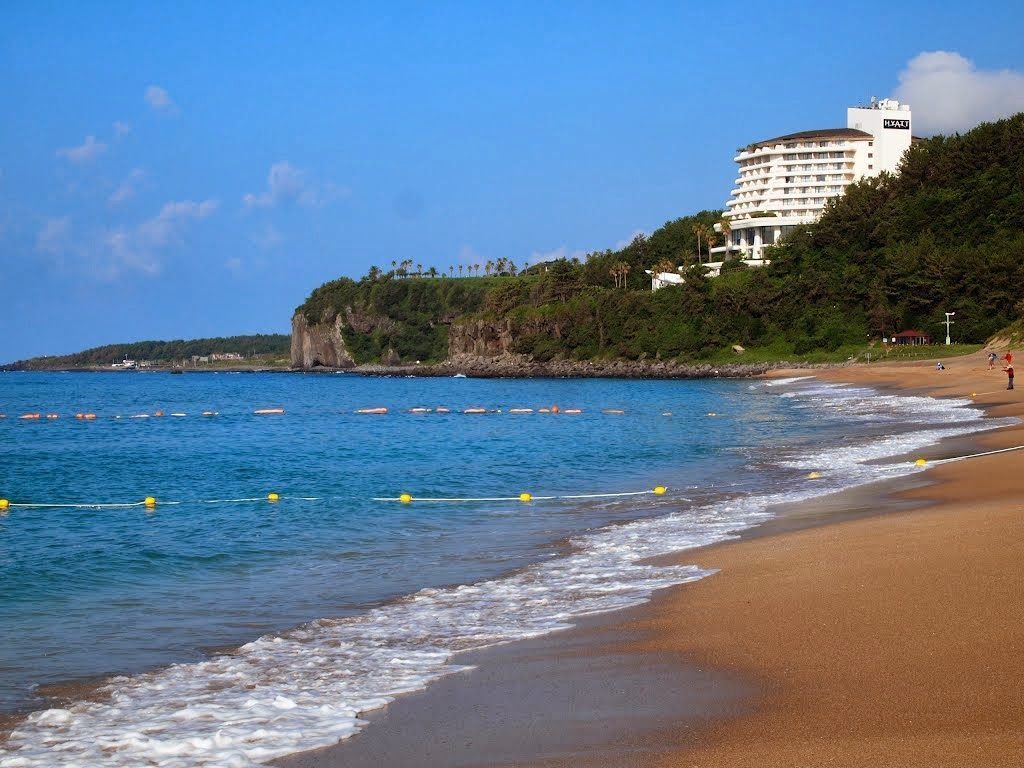
Keistimewaan dari pantai Jung-Mun adalah Pantai Jung-Mun diketahui sebagai pantai pasir halus yang berbatasan dengan bukit kelapa dan perairan biru yang jernih di sisi lainnya. Di sebelah kanan pantai Jung-Mun terdapat Gua Haessikgul yang merupakan gua laut alami. Keistimewaan lain dari pantai Jung-Mun yang lainnya adalah gelombang airnya cukup baik untuk windsurfing dan berbagai olahraga air lainnya. Pantai ini akan ramai dikunjungi pada bulan Juni-Agustus.
https://eddypasaribu.blogspot.co.id/2013/
3. Bunjee Artpia
Salah satu keistimewaan dari Bunjee Artpia sehingga kita harus menjadikan Bunjee Artpia menjadi salah satu daftar destinasi ketika berada di pulau Jeju adalah kita dapat melihat berbagai koleksi jenis- jenis bunga yang mencapai lebih dari 1.000 spesies. Untuk setiap harinya wisatawan bisa melihat hampir 700 tumbuhan yang didatangkan dari berbagai negara. Jumlah yang banyak bukan untuk melihat Bunjee Artpia, menjadi sebuah tempat yang populer di Jeju.
http://aorundtheworld.blogspot.co.id
4. Camellia Hill
Jika kita liburan di pulau Jeju, maka Camellia Hill harus masuk dalam daftar tempat tujuan wisata saat berada di Jeju. Karena di Camellia Hill terdapat tanaman camellia yang sudah ada sejak 30 tahun. Keistimewaan dari Camellia Hill adalah di Camellia Hill terdapat lebih dari tanaman dari lebih 80 negara. Sampai saat ini ada lebih dari 6000 tanaman dari 500 varietes kamelia. Jadi gak salah jika Camellia Hill merupakan situs populer yang direkomendasikan oleh warga Korea setempat.
http://www.heydayswithhanna.com
5. Museum Haenyeo
kita mungkin belum tahu kalau Museum Haenyeo merupakan warisan budaya dan simbol dari pulau Jeju. Hal yang istimewa dari Museum Haenyeo ini adalah kita akan melihat cerita kehidupan seorang Haenyeo. Haenyeo merujuk pada kehidupan sehari-hari para penyelam wanita di pulau Jeju dimana mereka menggunakan peralatan sederhana untuk menjelajahi laut dan semua itu dibuat menjadi patung-patung menarik yang mengungkapkan cerita wanita penyelam di Museum Haenyeo.
http://eighteenpromises.blogspot.co.id

Busan
1. Pantai Haeundae
Haeundae adalah pantai terbesar di Korea. Pantai ini sudah populer bagi wisatawan mancanegara juga. Walaupun terbuka untuk umum (tidak ada tiket masuk), pantai ini sangat bersih dan indah. Ketika musim panas datang, pantai ini dipenuhi warga dan wisatawan untuk berkunjung. Bila berkunjung selain di musim panas, pastikan tetap memakai jaket ya, Minasan!
source: http://lexparadise.blogspot.com/2012/07/10-places-must-visit-in-busan-korea.html

2. Beomeo-Sa (Kuil Beomeo)

Kuil Buddha ini berusia sekitar 1,300 tahun dan adalah kuil terbesar dan bersejarah di Busan. Terletak di Gunung Geumjeong, kuil ini menawarkan pemandangan pegunungan yang sangat indah. Terdapat beberapa harta nasional Korea di kuil ini. Bagi Minasan yang ingin mencoba aktivitas menginap di kuil, Minasan bisa mencoba mengikuti program tersebut di Kuil Beomeo ini. Kuil ini terbuka bagi semua wisatawan (tidak hanya Buddhist) dan tanpa tiket masuk.
source: https://hagwondiaries.wordpress.com/tag/beomeosa-temple/
Website Beomeo-sa
URL:  http://www.beomeo.kr/eng_templestay/idt.php

3.Taejongdae Park

Taejongdae adalah natural park yang merepresentasikan Busan dan terkenal akan tebing batu di pinggir lautnya. Di dalam taman yang sangat luas ini, terdapat banyak tempat yang bisa dikunjungi, seperti mercusuar, kuil, dan tebing batu. Bila Minasan ingin berjalan-jalan saja, tidak perlu membayar tiket. Bila ingin naik kereta menuju tempat yang ingin dikunjungi, Minasan bisa naik Kereta Danubi seharga 2,000 won saja.
source: http://lexparadise.blogspot.com/2012/07/10-places-must-visit-in-busan-korea.html

Sumber :

http://blog.airpaz.com/id/wisata-pulau-jeju/
http://beautynesia.id/2128
Share
Tweet
Pin
Share
No comments

20 Must Visit Seoul Attractions & Travel Guide

For Seoul travel planning, refer to our How to Plan 6 Days 5 Nights Seoul Trip for Less Than RM2,550/SGD850 per pax.
Beside Seoul Attractions, check out our Busan Must Visit Attractions or Jeju Island Must Visit Attractions. For your travel convenience, open this Seoul Metro Map on your phone so you wont need a metro map.

1. Gyeongbokgung Palace

Gyeongbokgung Palace arguably the most beautiful and remains the grandest of all five palaces is also called “Northern Palace” because it is the furthest north when compared to the neighboring palaces of Changdeokgung (Eastern Palace) and Gyeongheegung (Western Palace).
The name of the palace, Gyeongbokgung, translates in English as “Palace of Shining Happiness.” The premises were destroyed by fire at the time of Japanese occupation from 1592-1598. However, all of the palace’s 7,700 rooms were later restored under the leadership of Heungseondaewongun during the reign of King Gojong.
The National Palace Museum of Korea is located south of Heungnyemun Gate, and the National Folk Museum is located east within Hyangwonjeong.
Free Guided Tour Tours depart from in front of the information center at Heungnyemun Gate (흥례문).
– Duration: About 1 hr-1 hr 30 min
– Tour Schedule
English: 11:00, 13:30, 15:30
Japanese: 10:00, 12:30, 14:30
Chinese: 10:30, 12:30, 14:00, 16:00
Opening Hours : March to October 09:00-18:00 / November to February 09:00-17:00. Closed on Tuesday
Admission Fees : Adult 3,000 KRW / Child 1,500 KRW

How to Get to Gyeongbokgung Palace

By Subway : Gyeongbokgung Station Line 3 – Exit 5

2. Royal Guard Changing Ceremony

The Royal Guard changing ceremony started since 1459 during the Joseon Dysnasty. After extensive research from historical records, the ceremony has been reenacted since 1996 allowing visitors a rare insight of this traditional royal palace ceremony.
The ceremony takes part at Gwanghwamun Gate, the entrance of Gyeongbokgung Palace where the king rule the country.
Royal Guard Changing Ceremony Time – Every hour starting from 1000 & ends at 1600. Closed on Tuesday.

How to Get to Gyeongbokgung Palace

By Subway : Gyeongbokgung Station Line 3 – Exit 5

3.  Myeongdong

It is all about fashion and skin care in Myeongdong, Seoul’s most prominent shopping district. If it’s variety that you’re after, there’s no better place to shop than Myeong-dong where you’ll find everything from internationally-recognized name brands to unique items.
Myeongdong also houses a variety of family restaurants, fast food, plus Korean, Western and Japanese dining options. Many restaurants in Myeongdong specialize in pork cutlet (donkas) and kalguksu (thick noodles).
Not to forget, Myeongdong is the best place to shop for famous Korean Cosmetic brands such as Etude House, Skin Food, Laneige, The Face Shop, Missha!
Opening Hours : 10am to 10pm everyday

How to Get to Myeongdong

By Subway : Myeongdong Station Line 4 – Exit 5, 6, 7, or 8

4. N Seoul Tower

N Seoul Tower is a communication and observation tower located on Mt. Namsan. The tower has been a symbol of Seoul since it first opened to the public in 1980
From the top, the tower offers great panoramic views of the city. Visitors can enjoy its cultural space with various performances, movies, exhibitions as well as upscale restaurants and snack bars.

Book Online :  20% Discount off N Seoul Tower Instant E-tickets

Opening Hours : Sunday-Friday: 10:00-23:00 / Saturday: 10:00-24:00

Getting there

By Subway & Bus
Chungmuro Station Line 3 or 4 – Exit 2. Take Namsan Circular Shuttle Bus No. 2 or 5 (in front of Daehan Cinema) to N Seoul Tower.
By Subway & Cable Car
Myeongdong Station Line 4 – Exit 3. Walk for about 15 minutes following the street on the right side of the Pacific Hotel. The cable car boarding place will be seen ahead.
Check the map – http://www.seoultower.co.kr/en/visit/cablecar
Fare: Round-trip – 8,500 won / One-way – 6,000 won
Cable Car Opening Hours: 10:00~22:30

5. Bukchon Hanok Village

Situated between by two palaces, Gyeongbokgung to the west and Changdeokgung to the east, this village has the largest cluster of privately owned traditional Korean wooden homes or hanok in Seoul.
The Bukchon area is a traditional residential area in Seoul that boasts 600 years of history. Its location reflects the views of neo-Confucianism, regarding the world and nature, during the Joseon Dynasty.
Hanok architecture places great emphasis on the topographical features of the land on which it is built. Structural arrangements, layouts, and other spatial aesthetics are major concerns here, as are the styles of the buildings themselves.

Getting there

By Subway- Anguk Station Line 3 – Exit 2. Walk straight for about 300m.

6. Nami Island ( Winter Sonata )

For Korean Drama lovers, Nami Island is a place which does not requires further introduction as this is the birth place of all the Korean Craze. This is one of the place where the famous international Korean Drama Winter Sonata was filmed. Hence to put it short, it is a must visit for all Asian tourists!
Namiseom Island was formed as a result of the construction of the Cheongpyeong Dam. It is a half moon shaped (462,809㎡) isle, and on it is the grave of General Nami, who led a great victory against the rebels in the 13th year of the 7th king of the Joseon Dynasty, King Sejo (reign 1455 ~ 1468).
Admission Fees : Adults : 10,000 won / Children (ages 3-13) : 7,000 won
※ Round-trip ferry fare & tax included
Opening Hours :  Daily 7:30am to 9:30pm

How to Get to Nami Island

1. By Subway + Taxi : Take the Subway to Sangbong Station Line 7. Transfer to Gyuongchun Line Train to Gapyeong Station (P134). From the station, take a taxi (approx KRW4,000 – KRW5,000 per way) to Nami Island.
2. ITX Train + Taxi : Take the Subway to Yongsan Station Line 1. At Yongshan Station you can buy ITX Train ticket at counter to Gapyeong Station (You cant use T-Mobile card for this train). From Gapyeong, take a taxi (approx KRW4,000 – KRW5,000 per way) to Nami Island.
ITX train is faster than subway to Nami Island as it has fewer stops however price is higher at approx KRW5,000 per person per way.

7. Gwangjang Market

Gwangjang Market was the first permanent market in Korea selling local delicacy, silk, satin, and linen bed-sheet. The market continue to attracts both locals and tourists as Gwangjang Market might be the best place to try all shorts of Korean street food.
There are plenty of food stalls in the market selling mainly bindaetteok (mung bean pancake), bibimbap, gimbap, sundae (blood sausage), tteokbokki and noodles.
Opening Hours : Monday to Saturday 9.00am to 10.00pm

How to Get to Gwangjang Market

1. Subway :  5-ga Station (Line 1), Exit 8.
2. Subway : Euljiro 4-ga Station (Line 2 & 5), Exit 4.

8. Changdeokgung

Credit: @jessereneroxas
Changdeokgung Palace was the second royal villa built following the construction of Gyeongbukgung Palace in 1405. The buildings have remained largely intact over six centuries and served as a backdrop for the last chapters of the Joseon period (1392-1910).
Korea’s last emperor Sunjong passed away on these grounds in 1926, and it’s commonly known that members of royal descendants lived in Nakseonjae, a cluster of unpainted palace buildings well into the late ‘80s.
The palace had a great influence on the development of Korean architecture, garden and landscape planning, and related arts, for many centuries. It reflects sophisticated architectural values, harmonized with beautiful surroundings.

Admission Fees

Individuals: Adults (ages 19-64) 3,000 won/Children (ages 7-18) 1,500 won
Huwon Tour (Secret Garden area) – Adults (ages 19 and over) 8,000 won / Young adults 5,000 KRW / Children (ages 7-18) 2,500 won

Opening Hours

Changdeokgung Palace & Huwon Course – Tuesday to Sunday 9.00am to 05.00pm. Closed on Monday.

How to Get to Changdeokgung Palace

Subway – Anguk Station (Line 3), Exit 3. Walk straight from the exit (towards east) for about 5-min to arrive at the palace entrance.

9. Hongdae

Hongdae is the epic center of Seoul’s vibrant and youthful shopping and nightlife district. Many of Seoul’s idiosyncratic clubs that draw the younger set are clustered in the area.
With the prestigious Hongik University nearby, the area attracts bountiful students and visitors alike to shop, dine & club. There are plenty clothing stalls and vintage shops can be found along the main passageway, Eo Ulmadang-gil.
Getting there
By Subway – Hongik University Station Line 2 – Exit 9

Hongdae Trickeye Museum

Being world’s first augmented reality museum Trickeye Museum is definitely a must visit attraction if you travel to Seoul. It’s actually a whole complex offering all kinds of attractions that include, but are not limited to main Trickeye Museum, Ice Museum (really made of ice), virtual reality zone, Love Museum (Seoul’s first and only museum for adults), mirror maze etc. They even have a Hanbok (Korean traditional clothing) rental booth there! Not to mention, Trickeye is conveniently located in Hongdae – Korea’s famous Indie and youth culture area in Seoul that has been featured in numerous Korean dramas.
Tips: You will need your smartphone to take photos and videos with augmented reality effect, so make sure it is fully charged and bring a power bank
Opening Hours: 9a.m. – 9p.m. (last admission at 8p.m.)
Getting there: Hongik University station (green line 2), exit 9.
Trickeye’s website: http://trickeye.com/seoul/en
Facebook: https://www.facebook.com/trickeye.museum/

10. Ikseon-dong Hanok Village

Ikseon-dong’s Hanok Village was first established in 1920 and is well preserved. The area caught us by surprise as it isnt an attraction typically recommended. However we strongly recommend to visit this area.
The living heritage evokes nostalgia of old Korea while roaming the alleys often bring surprising discovery. The area offers a variety artisan cafes, gastro pubs, family restaurants and creative retail shops.
If you are here, make sure to visit Dongbaek Yanggwajeom for its souffle pancake and Jung’s sandwich.
Opening Hours – Vary by shops. Usually 9am to 11pm.

How to Get to Ikseon-dong’s Hanok Village

Subway – Jongno 3(sam)-ga Station (Line 5), Exit 4. Walk across the street into the alley.

11. Noryangjin Fish Market

Noryangjin Fish Market is one of South Korea’s biggest fish market trading approx 300 tonnes of marine products daily. The fish market sells a wide variety of seafood such as King Crab, Snow Scrab, abalone, octopus, clams, fish, sashimi. Many visitors will attempt to try Sannakji (live octopus sashimi) at the market.
The best part while visiting the market, you can buy the fresh seafood and bring up to the restaurant on 1st floor to be cook and served immediately. Do take note to bargain wisely and it might be better to choose the restaurant yourself instead being recommended by the vendor. Also ask properly for the cooking price to avoid any shocking bill.
Opening Hours
The wholesale market opens almost 24 hours however visitor usually visit when the restaurant operates.

How to Get to Noryangjin Fish Market

Subway : Noryangjin Station (Line 1) – Exit 1.

12. Insadong

One of the most memorable Seoul attractions and represents the focal point of Korean traditional culture and crafts. Stores in Insa-dong specialize in a wide variety of goods that can only be purchased or appreciated in Korea: hanbok (traditional clothing), hanji (traditional paper), traditional teas, pottery, and folk crafts.
There are about 100 galleries in the area and you can see every example of traditional Korean fine art from paintings to sculptures. The teahouses and restaurants are the perfect compliment to the galleries.
Every Sunday from 10:00 – 22:00, some streets are blocked off from traffic and it becomes a cultural space. Stores set up booths outside and others set up shop (Korean candy merchants and fortune tellers.) There are traditional performances and exhibits as well.

How to Get to Insadong

By Subway
Exit 6 – Anguk Station Line 3. Walk straight 100m & turn left.
Exit 3 – Jonggak Station Line 1. Walk 300m straight, turn left. then 100m straight & veer left into Insa-dong alleyway.

13. Cheonggyecheon Stream

Cheonggyecheon stream was built since the Joseon Dynasty (1392-1910). It has been meticulously restore under Seoul’s urban renewal project.
The 11km stream starts from Cheonggye Plaza, a popular cultural arts venue, and passes under a total of 22 bridges before flowing into the Hangang (River), with many attractions along its length.
It is one of the favourite leisure spot for the locals in the evening.

How to Get to Cheonggyecheon Stream

Subway – Jongak Station (Station Line 1) -Exit 5. Walk 200 metres.

14. DDP White Rose Garden

The DDP Rose Garden started of as a temporary exhibition but gained popularity especially among couples. A total of 25,550 LED roses light up when night fall creating an impressive stream of white roses.
The display began on National Liberation Day in 2015 as a celebration of the nation’s 70th year of independence. The number of roses on display corresponds to the number of days since liberation: 365 days multiplied by 70 years is equivalent to 25,550 roses.

How to Get to DDP White Rose Garden

By Subway : Dongdaemun History & Culture Park St Line 2,4,5

15. Dongdaemun

Dongdaemun is Korea’s largest wholesale and retail shopping district has 26 shopping malls, 30,000 specialty shops, and 50,000 manufacturers. Opening from 10:30 a.m. to 5:00 a.m. except Monday & some public holidays, you can literally shop all night !!
The fabric and clothing here are of the latest fashion trends in the world. Inventory is imported and exported in real time, making Dongdaemun a must-visit for fashion enthusiastic.
When you are visiting Dongdaemun you can also visit Heunginjimun. Heunginjimun was the east gate of the capital city of Seoul built in 1398.
At that time, four large gates and four small gates were built in the fortress wall surrounding the city & were inscribed with the four letters of In (perfect virtue), Ui (justice), Ye (Civility) and Ji (Wisdom).
Opening Hours : Tuesday to Saturday – 10.30am to 5.00am / Sunday – 10.30am to 11.00pm
Closed on Monday & some public holidays.

How to Get to Dongdaemun

By Subway : Dongdaemun History & Culture Park St Line 2,4,5

16. Everland

Operated by Samsung Group, Everland is South Korea’s largest theme park at 100 hectares. It is ranked as the 4th most visited theme park in the world by offering 5 main Festivals and exciting entertainments all year around.
The park is home to over 40 heart-pounding rides and attractions. In addition to ‘Safari World’ featuring white tigers, tigers, lions and bears, ‘Herbivore Safari’ opened in April 2010, letting visitors get up close and personal with the safari’s giraffes, elephants, and ostriches.
Everland is also known for its gorgeous flower arrangements and beautiful gardens, which have been year-round fixtures since the Rose Festival in 1985.

Book Online : 45% off Everland Korea Theme Park Instant E-Tickets

Opening Hours – Sunday to Friday – 10am to 7pm / Saturday & Public Holidays – 10am to 8pm. Check the daily time on their website.

How to Get to Everland

By Subway & Bus – Jeondae-Everland Station (Yongin EverLine) – Exit 3. Take the free shuttle bus to Everland. 
For More Info : Everland Official Website

17. Lotte World

Lotte World consists of the world’s largest indoor theme park (a Guinness World Record) which is open all year around, an outdoor amusement park called “Magic Island”, an artificial island inside a lake linked by monorail, shopping malls, a luxury hotel, a Korean folk museum, sports facilities, and movie theaters all in one place.
One of the major reasons tourists are attracted to Lotte World is the amusement rides. The Gyro Drop and Gyro Swing are the top pleasers– a steep drop with an altitude of 70 meters, or taste the thrilling sensation of being inside a tornado.
The Flume Ride is a long boat with a high-altitude wave, and the Spanish Pirate Ship swings at an electrifying 75 degrees. Besides the excitement of these rides, Lotte World also contains a variety of parades and laser shows.

Book Online : 48% Off Lotte World Seoul Korea Instant E-Ticket

Opening Hours – Daily 09:30-22:00

How to Get to Lotte World

By Subway – Jamsil Station (Line 2, 8) – Exit 4.
For More Info : Lotte World Official Website

18. South Korea Demilitarized Zone

The war between the North and South Korea has not ended until today. Experience first hand at one of the world most dangerous border and find out how the demilitarized strip of land came about. Get a rare glimpse of North Korea from the Dora Observatory.

Book Online : South Korea Demilitarized Zone Half-Day Tour

19. Itaewon

Itaewon is choc-a-block with trendy bars, clubs, restaurants and shops selling everything from reproduction Korean furniture and tailored suits to jewelry and Korean pottery.
Seoul even designated Itaewon as its first ‘Special Tourism District,’ to highlight it as a destination for internationals to enjoy a diversity of culture, shopping, and entertainment experiences.
Opening Hours – Daily 10am to late at night

How to Get to Itaewon

By Subway : Itaewon Station Line 6.

20. Seoraksan National Park (Mount Seorak)

Mount Seorakan
Seoraksan is the highest mountain in the Taebaek mountain range in the Gangwon province in eastern South Korea. It is located in a national park near the city of Sokcho. After the Hallasan volcano on Jeju Island and Jirisan in the south, Seoraksan is the third highest mountain in South Korea.
The Daechongbong Peak of Seoraksan reaches 1,708 metres (5,603 feet). The Taebaek mountain chain is often considered the backbone of the Korean peninsula.

Book Online : Seoraksan National Park 1 Day Tour

Admission Fees – Free for the National Park

How to Get to Seoraksan National Park

By Bus – From Seoul Express Bus Terminal or Dong Seoul Bus Terminal, take a bus to Sokcho (Travel time: approx. 2 hr 30 min).

Winter Ski & Snowboarding in Seoul

Planning to go for ski or snowboarding during winter when visiting Seoul? Here are some day tours package to make your trip easier.

sumber : http://www.tommyooi.com/seoul-attractions-travel-guide/

Share
Tweet
Pin
Share
No comments

About me


Nadia Yulian Larasati

STIKES Nasional at Surakarta
Medical Analyst

An ordinary girl who love all about South Korean

I'm your sun that'll shine through the rain
I'll be your coffee that gets you through the day
Eric Nam - Good For You

Follow Us

recent posts

Blog Archive

  • ▼  2018 (5)
    • ▼  May (1)
      • [ Tugas 5 ] POSTER SEOUL
    • ►  April (1)
    • ►  March (3)
Powered by Blogger.

Report Abuse

About Me

Unknown
View my complete profile

[ Tugas 5 ] POSTER SEOUL

Terkadang kita pasti kesulitan dalam membuat poster apalagi jika kita hanya memiliki imajinasi yang bisa dibilang tidak terlalu banyak. Kali...

Search This Blog

Video of the Day

Instagram

FOLLOW ME @INSTAGRAM

Flickr Images

Like us on Facebook

Popular Posts

  • [ TUGAS 1 ] 20 Must Visit Seoul Attractions & Travel Guide
    20 Must Visit Seoul Attractions & Travel Guide For Seoul travel planning, refer to our  How to Plan 6 Days 5 Nights Seoul Trip for Le...
  • Tugas 4 [ Korean Street Foods ]
    Sebagai negara dengan 4 musim, Korea Selatan memiliki berbagai hal unik disetiap musimnya. Pada kali ini, kita akan membahas musim din...
  • [ TUGAS 2 ] Lokasi Wisata di Jeju Island dan Busan
    Lokasi Wisata di Jeju Island dan Busan Jeju merupakan suatu daerah yang ada di Korea Selatan. Bagi pecinta drama korea, Jeju Island atau ...

Created with by BeautyTemplates